Fecha de recibido: 11/10/2025
Fecha de aceptado: 22/12/2025
Fecha de publicado: 15/01/2026
Introduction
Mother tongue interference is one of the most influential factors in the acquisition of English pronunciation as a foreign language. In the Ecuadorian context, university students frequently struggle to articulate sounds that do not exist in the Spanish phonological systems, which affects the clarity and accuracy of their oral production. Pronunciation plays a key role in communicative competence, as it directly impacts intelligibility and the overall effectiveness of language learning. At the Technical University of Cotopaxi, first-cycle students face particular challenges when learning English sounds that differ significantly from those in Spanish. This study forms part of a broader effort to strengthen phonetic competence form early stages of instruction.
The central objective is to identify the ´phonetics errors that arise due to the influence of the mother tongue, based on a systematic analysis of students’ oral production. The guiding research question is: How does the mother tongue affect English pronunciation in beginning-level students? Understandings the root of these phonetic errors is essential for designing pedagogical strategies that directly address learners’ real pronunciation difficulties.
Literature Review
According to Da Costa and Almanzar Alvarado (2020), interference from the mother tongue significantly affects the process of learning English. Students make a mistake, generating errors in pronunciation, grammar and vocabulary. The transfer of patterns Spanish to English affects the correct articulation of certain sounds.
Phonetic interference occurs when students apply Spanish patterns to English. Learners literally translate the grammar of their native language into English. In addition, learners face different levels of difficulty depending on the phonological differences between their native language and the foreign language. In this sense the absence of phonemes specific to the native language affects the production system of the second language (Archibald, 2021).
Rallo (2022) explains that bilingual Spanish-Catalan learners studying English as a foreign language make more pronunciation errors when reading aloud that when writing tasks involving repetition. He also shows that cognates, or words that are similar in L1 and L2, can increase phonetic errors.
In the study conducted by Noviyenty and Putri (2021), the authors investigated how the Rejang mother tongue interferes with English pronunciation in EFL students in Indonesia. Their results show interference in vowels, consonants, and diphthongs: for example, the transformation of short vowels into long vowels, diphthongs into vowels, etc.
Hayeesa-i (2023) investigated how different native languages (Pattani Malay, Thai, and Arabic) affect the pronunciation of English in university students, revealing that each L1 generates distinct patterns of English phoneme substitution and that additional factors, such as bilingualism or having taken phonetics courses can positively or negatively influence pronunciation accuracy.
Widiantari et al. (2021) conducted a study on students whose mother tongue is Malay, focusing on the voiceless plosive phonemes /p, t, k/ in English. They found a high percentage of errors attributable to L1 transfer to English, highlighting the importance of considering the learners’ mother tongue when designing pronunciation instruction.
Munro (2021) examined the concept of difficulty in second-language vowel acquisition, emphasizing that the perception and production of L2 vowels are influenced not only by phonetic distance between the L1 and L2 sound systems but also by learners’ exposure, experience, and cognitive factors. The study highlights that what is considered “difficult” for one language group may not be equally challenging for another, since each native language shapes distinct perceptual boundaries and articulatory habits. This finding supports the idea that mother tongue interference plays a crucial role in determining which English vowels are most problematic for learners from different linguistic backgrounds.
Ristati et al. (2024) conducted a study examining the pronunciation challenges of English consonant fricatives among Indonesian EFL learners. The authors discovered that learners often replaced difficult English fricatives such as /θ/, /ð/, and /ʃ/ with their nearest equivalents in the Indonesian phonetic inventory, demonstrating a clear influence of the mother tongue on second language pronunciation. The research highlights that these pronunciation errors are primarily attributed to the absence of certain fricatives in the learners’ L1 and limited exposure to authentic English input. Moreover, the study emphasizes the need for explicit phonetic instruction and auditory discrimination training to improve learners’ accuracy in producing fricative sounds.
These findings reinforce the relevance of considering L1 phonological structures in designing pronunciation pedagogy-an insight that directly supports the focus of this current research on Spanish interference in English phoneme production.
Zhang (2023) analyzed the influence of learners’ first language on their English pronunciation of the English pronunciation, focusing specifically on the articulation of the English consonant /r/. The study revealed that speakers tend to replace the English /r/ with sounds that exist in their native language, producing either a trill or a flap depending on their L1 phonetic inventory. This substitution results in perceptible accent interference and reduced intelligibility. Zhang emphasized that such errors are not merely articulatory but also cognitive, since learners often rely unconsciously on their mother tongue’s phonological system when producing second-language sounds. The research concludes that explicit contrastive phonetic instruction and auditory training can significantly reduce this type of L1 interference. This aligns with the current study’s aim of phonetic transfer and segmental substitution.
Al-Hamzi et al. (2021) analyzed pronunciation errors in English front vowels among Yemeni EFL learners and found that most mistakes resulted from the direct transfer of vowel features from the learners’ first language, highlighting how L1 interference shapes second-language phonetic production.
Sharma (2022) defines pronunciation as the combination of segmental and suprasegmental features that enable speakers to communicate clearly and intelligibly in a second language. The author highlights that mastery of pronunciation is essential for successful oral communication, since it directly affects comprehensibility and confidence in language use.
According to Sharma, pronunciation should not be limited to sound accuracy but should also integrate rhythm, stress, and intonation patterns to achieve naturalness in speech. As emphasized by Dahmen et al. (2023), suprasegmental training can yield significant improvement in prosodic control and listener perception, making it a vital component of advanced phonetic analysis.
Pacheco Vásquez (2025) explains that understanding the difference between phonetics and phonology is fundamental for pronunciation pedagogy. While phonetics focuses on the physical properties of speech sound-such as articulation, acoustics, and auditory perception-phonology studies how these sounds function within a specific linguistic system. The author argues that balanced understanding of both disciplines allows teachers to identify the source of learners’ pronunciation difficulties more accurately and to apply targeted correction strategies. This distinction becomes particularly relevant when addressing L1 interference, as certain pronunciation errors may stem from phonetic limitations rather than phonological transfer.
Indriyani et al. (2024) propose integrating technological tools and innovative pedagogies into phonetic instruction, arguing that digital applications and interactive software enhance students’ motivation and auditory discrimination skills. Their systematic review found that models such as Communicative Pronunciation Teaching and Phonics-based instruction were most effective when combined with audiovisual resources and individualized feedback systems.
Similarly, Asadova (2024) recommends implementing classroom strategies that foster phonetic awareness and student engagement. The author emphasizes that pronunciation teaching should be continuous and contextualized, encouraging learners to identify, compare, and reproduce sounds through interactive.
Language transfer, a core concept in second language acquisition, refers to the influence that the learner’s first language exerts on the target language. Zhou (2020) explains that such influence may lead to either positive or negative outcomes depending on the degree of similarity between the linguistic systems. Similarly, the IOSR Journal of Humanities and Social Science (2022) emphasizes that the extent of language transfer varies according to learners’ proficiency levels and the learning environment, suggesting that interference tends to decrease as linguistic awareness and exposure to the target language increase.
Zhang (2022) deeply explores how the phenomenon of languages transfer manifests across different age groups and proficiency levels in second language learners. The author highlights that the degree of interference from the first language (L1) is not static but varies depending on cognitive maturity, exposure, and linguistic awareness. According to the study, younger learners often exhibit higher levels of phonological transfer due to their reliance on native articulatory patterns, while more advanced or older learners gradually reduce negative transfer as they develop metalinguistic awareness and familiarity with the target phonetic system.
Furthermore, Zhang emphasizes that learning environment and teaching methodology play a decisive role: settings that promote active listening, imitation, and corrective feedback significantly help minimize the persistence of L1 interference. These findings reinforce the idea that phonological interference should not only be viewed as an error pattern but as a dynamic process that evolves with the learner’s linguistic development and instructional context.
Pinto Paucar (2024) carried out an empirical study to examine how Spanish as a mother tongue interferes with English pronunciation among university students. The author found that phonetic interference mainly affects the articulation of English vowels and consonants that do not exist in Spanish, such as /θ/, /ð/ and diphthongs. The research also highlights that most pronunciation errors arise from the negative transfer of L1 articulatory habits, particularly in the production of voiced and voiceless sounds, stressing the need for explicit phonetic instruction in EFL classrooms.
González, C., Cox, S. L., and Isgar, G. R. (2024) carried out an acoustic-phonetic investigation of word-final Spanish vowels, finding that non-modal phonation types (creaky voice, breathy voice, devoicing) occur with measurable frequency and can be detected via H1-H2 spectral tilt and spectrographic cues-results that underscore the importance of detailed phonetic analysis when comparing L1 and L2 vowel systems.
McCandless (2022) performed a comprehensive acoustic-phonetic analysis comparing native Spanish speakers and L2 Spanish learners (with L1 English) across all five Spanish vowel phonemes. The study revealed significant differences in vowel duration, F1, and F2 values between groups: for example, L2 learners showed longer durations on stressed vowels than native speakers, and lower formant frequencies (F1 and F2) depending on vowel and proficiency level. McCandless argues that because Spanish has a smaller vowel inventory and shorter, more uniform vowel durations compared to English, the articulatory and acoustic habits developed by L1 Spanish speakers pose challenges when acquiring L2 vowel systems-especially for sounds with length/duration contrast or more complex formant structures. The author concludes that achieving native-like production of L2 vowels requires targeted training on the parameters that show persistent deviation (notably F2 and duration) and that phonetic instruction should include spectrographic feedback and explicit formant training reduce L1 interference.
The literature shows that the influence of the mother tongue plays a crucial role in shaping English pronunciation among learners of English as a foreign language. Phonological interference occurs when the sound system of the first language affects the articulation and production of English phonemes, resulting in substitutions, distortions, or omissions of certain sounds. This phenomenon is particularly noticeable in the pronunciation of vowels and consonants, where differences in articulation, voicing, and duration cause systematic deviations from native-like speech. Phonetic and acoustic studies reveal that these deviations can be identified and analyzed through detailed observation of formants, stress, and temporal patterns.
Understanding these aspects provides valuable insight into how native language structures interfere with second language pronunciation. Therefore, this study aims to describe the phonetic features that reflect Spanish interference in the English pronunciation of university students, contributing to a clearer understanding of the relationship between L1 and L2 phonological systems.
Materials and methods
 |
The study employed a descriptive approach. A total of thirty-eight first-cycle students from the Technical University of Cotopaxi participated in the research. The instrument consisted of 13 English sounds (/iː/ /ɪ/ /aː/ /æ/ /ʌ/ /ɒ/ /b/ /v/ /s/ /θ/ /ð/ /t/ /h/), each evaluated through three words and one sentence. Students’ oral productions were recorded and later analyzed using a rubric that classified phonetic errors as substitution, omission or addition. The analysis involved careful listening of each recording and systematic documentation of the established criteria. This producer allowed for the identification of the most frequent error patterns and the determination of the influence of the mother tongue on English sound articulation.
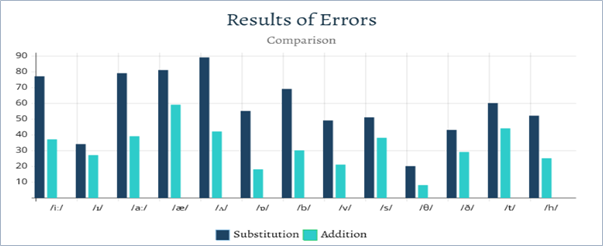
Figure 1. Results of the application of the instrument.
Results and discussion
The analysis of the students’ recordings revealed clear patterns of phonetic interference resulting from the influence of Spanish on the articulation of English sounds. The results showed that the errors were distributed among the three categories established in the rubric-substitution, omission, and addition-although substitution consistently appeared as the most frequent type across almost all the sounds evaluated. The figure illustrates the comparative frequency of substitution and addition errors for each of the thirteen English phonemes included in the instrument.
For the vowel /iː/ students demonstrated a high tendency to replace it with the short Spanish vowel /i/, resulting in 78 substitution errors, while addition errors were notably lower at 36. A similar pattern occurred with the phoneme /ɪ/, where substitution errors reached 34, showing that learners struggled to differentiate tense-lax vowel contrasts that do not exist in Spanish. In the case of /æ/, the substitution rate increased even more dramatically, reaching 80 errors, which reflected the absence of this sound in the Spanish phonological system and the students’ reliance on the closest Spanish equivalents.
For the mind vowel /aː/ and /ʌ/, substitution errors were again predominant, with 78 and 88 instances respectively. The results indicated that students tended to replace these vowels with Spanish-like open sounds, leading to inaccurate articulation. The addition errors for these phonemes, although present, remained significantly lower. The vowel /ʌ/ showed one of the highest substitution counts, reinforcing the difficulty students had with central vowels unfamiliar to Spanish speakers.
Regarding consonantal phonemes, the analysis revealed varied performance depending on the degree of phonetic similarity with Spanish. For /ʃ/, students produced 54 substitution errors and 42 addition errors, indicating moderate difficulty with the articulation of this fricative. The phoneme /ʤ/ resulted in 68 substitution errors and 30 addition errors, suggesting that affricates also posed challenges.
The most significant consonantal difficulty appeared with the interdental sounds /θ/ and /ð/. Students produced only 19 substitution errors for /θ/, yet addition errors reached 10, showing that although the sound was difficult, learners often avoided producing it altogether. For /ð/, substitution errors increased sharply to 44, accompanied by 29 addition errors, highlighting its complexity for Spanish-speaking learners.
Finally, the phonemes /ʧ/ and /h/ showed substitution frequencies of 60 and 52 respectively, with addition errors of 44 and 25. The high number of substitution errors for /ʧ/ indicated confusion with similar affricate of fricative sounds present in Spanish, while the results for /h/ suggested that learners often omitted or weakened this sound due to its inconsistent presence in Spanish phonology.
Overall, the results demonstrated that substitution was the dominant type of error, particularly in sounds absent from Spanish, while addition errors occurred less frequently. These findings confirmed that mother tongue interference significantly affected the students’ ability to articulate English sounds accurately.
Discussion
This study addresses the research question of how the mother tongue influences English pronunciation among first-cycle university students. Based on the results, it is evident that Spanish significantly affects the production of English sounds, particularly through phoneme substitution. The predominance of substitution errors confirms that students tend to replace unfamiliar English sounds with the closest equivalents from their native phonological students pronounce words correctly through auditory recognition, despite lacking reading or phonetic decoding skills, suggest that exposure and listening experience play a crucial role in pronunciation development, sometimes compensating for limited formal phonetic knowledge.
However, this reliance on auditory memory may also hinder long-term pronunciation accuracy if not supported by explicit phonetic instruction. One limitation of this study is its focus on a single academic cycle and a limited sample size, which restricts the generalization of the findings. Additionally, the analysis was centered on segmental features, leaving suprasegmental aspects such as stress and intonation for future research. Despite these limitations, the results highlight the importance of integrating systematic phonetic training in early EFL instruction.
This study opens the possibility of rethinking pronunciation teaching approaches by balancing auditory exposure with explicit phonetic awareness to reduce negative transfer from the mother tongue.
Conclusions
This study concludes that the mother tongue plays a decisive role in shaping English pronunciation among first-cycle students at the Technical University of Cotopaxi. The findings demonstrate that Spanish phonological patterns strongly influence learners’ articulation of English sounds, particularly through substitution errors involving phonemes absent from the Spanish sound system.
The results also reveal that students frequently rely on auditory familiarity rather than formal phonetic knowledge, which allows them to pronounce certain words correctly without understanding their phonetic decoding. This confirms that pronunciation difficulties are not random but systematic and closely linked to negative language transfer.
In response to the research question, the study establishes that mother tongue interference significantly affects English pronunciation accuracy at the initial university level. Consequently, the research highlights the need to incorporate explicit and systematic phonetic instruction from early stages of English learning in order to reduce persistent errors, improve articulatory precision, and support more effective oral communication.
References
Al-Hamzi, S., Al-Hamzi, A., & Al-Hamzi, R. (2021). Pronunciation errors in English front vowels among Yemeni EFL learners. Journal of Language and Linguistic Studies, 17(2), 845-858.
Archilbald, J. (2021). Ease and difficulty in L2 phonology: A mini-review. Frontiers in Communication, 6, Article 626529. https://doi.org/10.3389/fcomm.2021.626529
Asadova, B. (2024). Effective strategies for teaching phonetics in the classroom. Global Scientific Research Hub. https://gsrh.net/index.php/home/article/view/43
Da Costa, J., & Almanzar Alvarado, M. (2020). Mother tongue interference in learning English as a foreign language. Journal of Applied Linguistics and Language Research, 7(4), 112-125.
Dahmen, S., Grice, M., & Roessig, S. (2023). Prosodic and segmental aspects of pronunciation training and their effects on L2. Languages, 8(1), Article 74. https://doi.org/10.3390/languages8010074
González, C., Cox, S. L., & Isgar, G. R. (2024). Phonation patterns in Spanish vowels: Spectral and spectrographic analysis. Language, 9(6), Article 214. https://doi.org/10.3390/languages9060214
Hayeesa-i, T. (2023). Mother tongue interference towards students’ English pronunciation: A case study of Fatoni University students in English for communication course. Journal of English for Specific Purposes in Indonesia, 2(1), 41-52. https://doi.org/10.33369/espindonesia.v1i2.26082
Indriyani, D., Rahmawati, R., & Wibisono, A. (2024). Integrating technology and innovative pedagogies in phonetic education: A systematic literature review. ELITE Journal of English Linguistics and Education. https://journal.unesa.ac.ud/index.php/elite/article/view/39838
IOSR Journal of Humanities and Social Science. (2022). Linguistic analysis of the phenomenon of language transfer. https://www.iosrjournals.org/iosr-jhss/papers/Vol.%2022%20Issue4/Version-4/E2204043235.pdf
McCandless, A. (2022). Acoustic analysis of L1 and L2 Spanish vowels. Proceedings of the 2022 Annual Conference of the Canadian Linguistic Association. University of Toronto. https://cla-acl.ca/pdfs/actes-2022/McCandless-CLA-2022.pdf
Munro, M. J. (2021). On the difficulty of defining “difficult” in second-language vowel acquisition. Frontiers in Communication, 6, Article 639398. https://doi.org/10.3389/fcomm.2021.639398
Noviyenty, L., & Putri, M. I. (2021). Mother tongue interference towards students’ English pronunciation: A case study in IAIN Curup. In Proceedings of the International Conference on Educational Sciences and Teacher Profession (ICETeP 2020). https://doi.org/10.2991/assehr.k.210227.049
Pacheco Vásquez, E. A. (2025). The role of phonetics and phonology in teaching English pronunciation to non-native speakers. Revista Científica Multidisciplinaria Generando. https://revista.generando.org/revista/index.php/RCMG/article/view/570
Pinto Paucar, D. A. (2024). The interference of the Spanish mother tongue on English pronunciation [Undergraduate thesis, Universidad Técnica de Cotopaxi]. Repositorio UTC. https://repositorio.utc.edu.ec
Rallo, L. (2022). Factors affecting pronunciation accuracy in English as a foreign language: The case of Spanish-Catalan intermediate learners. Atlantis, 44(2), 45-64. https://doi.org/10.28914/Atlatis-2022-44.2.03
Ristati, R., Lestari, N., & Hartati, M. (2024). Challenges in pronouncing English consonant fricatives: Insights from Indonesian EFL learners. Journal of English Language Teaching and Linguistics. https://journal.ummat.ac.id/index.php/JELTL/article/view/27679
Sharma, L. R. (2022). Significance of teaching the pronunciation of segmental and suprasegmental features of English. Interdisciplinary Research in Education, 7(2), 45-56. https://www.nepjol.info/index.php/ire/article/view/43539
Widiantari, I., Aunurrahman, & Sahrawi. (2021). An analysis of mother tongue interference in English pronunciation. Journal of English Language Teaching and Education, 2(1). https://doi.org/10.31571/jelte.v2i1.45
Zhang, J. (2022). The impact of language transfer in different age ranges. Journal of Education, Humanities and Social Sciences, 13. https://doi.org/10.54097/ehss.v13i7910
Zhang, Y. (2023). The influence of the first language on the pronunciation of the second language: Taking consonant “r” in English as an example. Communications in Humanities Research, 3(2), Article 0229. https://doi.org/10.54254/2753-7064/3/20220229
Zhou, Y. (2020). On the promotion of positive transfer in second language acquisition. In Proceedings of ICEMBE 2020. https://doi.org/10.25236/icembe.2020.120