Fecha de recibido: 24/11/2025
Fecha de aceptado: 23/01/2026
Fecha de publicado: 09/02/2026
Introduction
The development of generative artificial intelligence models has transformed the ways in which students produce academic texts and learn to write in a second language; among these advances, OpenAI’s ChatGPT has become one of the most widely used tools to assist the writing process in English. Its implementation in educational environments has led to a reconfiguration of writing practices, where the boundaries between human authorship and technological mediation have become increasingly blurred (Baek et al., 2024). Unlike traditional automatic correctors, this type of system not only identifies grammatical errors but also provides contextualized feedback and complete discourse models that students can adapt or modify according to their communicative purpose (Bonner et al., 2023).
The emergence of ChatGPT has generated particular interest in the English teaching writing as a foreign language; recent studies by Mahapatra (2024) and Nelson et al. (2025) show that students perceive this tool as a form of support that enhances clarity, organization, and textual fluency. However, perceptions are not homogeneous; some users express concerns related to originality, technological dependence, and the reduction of critical reflection during text composition. These tensions reveal that the integration of artificial intelligence in academic practice cannot be understood solely in terms of efficiency but must also consider the learner’s subjective experience and their interaction with language.
The study by Mahapatra (2024) provides an intermediate perspective within this discussion; it demonstrates that ChatGPT’s impact depends on how it is incorporated into instruction. When educators use the tool to compare human and AI-generated texts, it fosters metalinguistic awareness; when used without guidance, it promotes mechanical imitation of style. Thus, positive or negative perceptions depend not only on the software itself but also on the educational practices that frame its use.
Teachers likewise perceive the use of ChatGPT as a methodological challenge; while it facilitates personalized instruction, it demands new strategies for assessment and guidance. Baek et al. (2024) argue that educators should revisit originality criteria and design assignments that encourage reflection on the writing process rather than solely on the final product. This implies rethinking how written competence is assessed, incorporating artificial intelligence as a transparent mediator within the formative process.
The present research is situated within this landscape of educational transformation; it aims to examine how university students perceive the use of ChaGPT in developing their academic writing skills in English. Rather than measuring learning outcomes, it seeks to understand the interpretations, expectations, and concerns that emerge from daily interaction with the technology. Through a mixed perspective—combining quantitative and qualitative analysis— the study aims to describe perception patterns and possible effects on student autonomy and confidence.
Therefore, this research does not attempt to judge the effectiveness of artificial intelligence but to analyze the interaction between the user and the tool; it explores how perceptions shape writing practices and how teacher guidance can foster an ethical and formative use of the model (Ravšelj et al., 2025). This research aims to explore how students conceptualize their interaction with generative artificial intelligence in language learning, focusing particularly on writing development. Understanding these perceptions is essential because students are not merely passive users of technology; rather, they reinterpret and adapt it to their personal learning strategies. In the case of the Technical University of Cotopaxi, examining students’ views on ChatGPT provides insight into how they integrate digital tools into academic literacy practices.
Consequently, the study seeks to identify the pedagogical implication of AI assisted writing English instruction, contributing to the broader discussion on responsible and reflective use of generative technologies in higher education. Aligned with this purpose, the study is guided by the following research question: How do students perceive the benefits of using ChatGPT to improve their writing performance? How do students evaluate the accuracy and usefulness of ChatGPT feedback in their writing process? Based on this inquiry, the general objective is to analyze students’ perceptions of ChatGPT as a tool for developing written expression in English.
Literature Review
What is ChatGPT?
ChatGPT is a conversational language model development by OpeAI, designed to understand and generate text in a manner similar to human language. Its structure is based on the Transformer architecture, trained on large volumes of data drawn from books, articles, websites, and social media (Sarrion, 2023). This training allows it to produce coherent and contextually appropriate responses to wide range of requests. The acronym GPT stands for Generative Pre-trained Transformer, which refers to its ability to generate text after being previously trained on multiple linguistic sources.
Since its launch, ChatGPT has been applied across various fields, both in education and in industry, due to its ability to process textual information and respond to questions rapidly. According to Marín Guamán (2023), its value lies in the capacity to produce text tailored to user needs—whether formal, academic, or conversational. In educational settings, this flexibility enables students to receive immediate feedback, access personalized explanations, and improve their communicative fluency through interaction with a model that simulates human conversation.
Impact of ChatGPT on Writing Skill Development
Use of ChatGPT in writing instruction has brought notable changes to the way students conceive the act of composing. Enamorado (2025) argues that the model functions as a tutor that accompanies text production, providing corrections, translations, and suggestions in real time. This type of digital assistance allows users to review structures, expand vocabulary, and improve coherence without depending entirely on teacher correction. Thus, interaction with artificial intelligence becomes a dynamic learning process where error is approached as an opportunity for growth.
One of the most mentioned advantages is the model’s ability to adjust its responses according to the user’s level progress. ChatGPT can provide explanations suited to the learner’s prior knowledge, enabling more personalized learning experiences (Enamorado, 2025). This digital tutoring supports academic autonomy and the development of self-regulation, as learners gradually learn to identify and correct their weaknesses with the system’s guidance.
Generative Artificial Intelligence University Education
The arrival of generative artificial intelligence higher education has altered learning dynamics and perceptions of knowledge. ChatGPT, in particular, has established itself as a versatile tool for processing information, composing texts, and providing instant feedback to users (Baek et al., 2024) B. Its popularity among students stems from its ability to adapt language and deliver detailed explanations of complex topics; however, it has also raised concerns about the originality of academic production. These transformations demand a reconsideration of how students interpret technological mediation within their educational experience.
Some studies, such as that of Dergaa et al. (2023), indicate that artificial intelligence creates new opportunities for autonomous learning, especially when used as support for understanding and synthesizing academic texts. Interaction with language models allows students to develop metacognitive strategies, as comparing their responses with those of the model helps identify conceptual gaps and reinforce comprehension. Nevertheless, this process does not always occur consciously; automated thinking can become an obstacle when learners delegate their reasoning entirely to the tool.
Academic Writing in English as a Foreign Language
Academic writing in English represents one of the most demanding processes for university learners; it requires the precise structuring of ideas, the use of specialized vocabulary, and the maintenance of discursive coherence. According to Mahapatra (2024), students of English as s second language often face difficulties in organizing their arguments and adapting their style to different academic genres. Within this scenario, ChatGPT emerges as an alternative that facilitates textual planning and syntactic revision, acting as an assistant that guides the construction of clearer and more cohesive sentences.
The study by Yanuarti et al. (2025) demonstrates that student perception varies according to linguistic proficiency; those with higher competence use ChatGPT to explore more advanced expressions, while beginners tend to rely on it as a translator or error corrector. This difference reflects that the tool does not replace formal instruction but complements it by offering a safe space for practice without the fear of making mistakes.
Students’ Perceptions of ChatGPT
Students’perceptions of ChatGPT are diverse and often contradictory; some view it as an ally for organizing ideas and finding synonyms or connectors, while others see it as a substitute that limits creativity. Nelson et al. (2025) found that many university students acknowledge the model’s usefulness in improving written expression but also express concern about the potential loss of authenticity in their texts. This duality is linked to the level of trust placed in the tool and to how students interpret its role within the learning process.
Findings by Vo and Nguyen (2024) confirm that perceptions are not universal; students from Asian educational contexts show greater acceptance of the system’s guidance, whereas those from Western contexts tend to evaluate its contribution more critically. This variability is associated with cultural and educational factors, particularly the type of instruction received and institutional norms regarding of the use of artificial intelligence.
Therefore, analyzing perceptions requires understanding not only what students think but also how they experience the tool and how that experience shapes their learning habits.
ChatGPT and the Improvement of Grammar, Vocabulary, and Textual Coherence
The impact of artificial intelligence on linguistic aspects of writing has been the focus of multiple studies; overall, findings suggest that the tool can strengthen grammatical and lexical precision when used reflectively. Barrot (2023) found that students improve their command of verb tenses and prepositions when receiving contextualized explanations. This type of feedback helps reduce recurring errors and enhances understanding of complex structures. In terms of coherence, ChatGPT provides examples of connectors and discourse structures that enhance textual fluency; nevertheless, Mahapatra (2024) warns that global coherence depends on communicative intent—something the model does not always interpret correctly. Therefore, its use should be complemented by human review, which provides semantic nuances and thematic cohesion.
Materials and Methods
The study adopts mixed-methods approach combining quantitative and qualitative perspectives to analyze students’ perceptions of ChatGPT use in English writing production. This approach integrates objective measurement of results with the interpretation of individual experiences; therefore, it allows for the assessment of not only linguistic performance improvements but also the way participants perceive the use of the tool during their learning process. According to Creswell and Plano Clark (2023), complementarity between both methods enables a more comprehensive understanding of educational phenomena.
In this study quantitative component focused on scores obtained in the pre-test and post-test, while the qualitative component emerged from the survey administered to the same students. This combination made it possible to observe real variations in writing performance while simultaneously collecting perceptions regarding usefulness, difficulty, and limitations experienced when using ChatGPT.
Type and Design of the Study
The research followed a quasi-experimental design with a pre-test–post-test structure and no control group. According to Hernández et al. (2023), this type of study allows the identification of learning changes resulting from a specific intervention by comparing outcomes before and after the implementation of a strategy. In this case, the intervention consisted of guided use of ChatGPT as a writing assistant.
The design was non-experimental and cross-sectional since the intervention took place over three consecutive sessions, without direct manipulation of independent variables beyond the planned use of the digital resource. The aim was to observe how ChatGPT influenced the quality of written texts and students’ perceptions of its pedagogical usefulness.
Population and Sample
The study population comprised students enrolled in Pedagogy National and Foreign Language-English at Technical University of Cotopaxi, specifically those are at the level two students who were taking courses related to academic writing in English. This group was chosen because they possessed a sufficient linguistic foundation to perform writing tasks, though they still exhibited difficulties in grammar, coherence, and vocabulary. The final sample consisted of 32 students, selected through purposive sampling. This number was deemed adequate as it allowed within-group comparisons and controlled analysis of individual results.
Data Collection Techniques, Instruments and procedure
Three complementary instruments were applied: a structured survey, a pre-test, and a post-test.
Survey: This instrument identified students’ perceptions regarding ChatGPT’S role in improving writing. The questionnaire included closed and Likert-scale items focused on perceived usefulness, feedback, autonomy, and writing confidence.
Pre-test and Post- test: These consisted of writing tasks adapted from Cambridge KET exam (level A2 (examenglish.com/KET/KEY_schools_writing_part2.html). The task required students to compose a short formal text, evaluated according to five criteria: organization, vocabulary, grammar, coherence, and use of language. Both tests were scored using a 25-points rubric (5 points per criterion). Results were recorded in Excel to calculate averages, improvements, and percentage variations.
The intervention lasted three consecutive days, with one hour of work per session.
· Day 1: The pre-test was administered without the use of ChatGPT. Students wrote an individual composition, evaluated with an adapted Cambridge rubric.
· Day 2: The ChatGPT intervention was implemented. Students uploaded their scanned texts to the platform and worked with the following guided prompts: “Review my text and correct grammatical or coherence errors; add brief feedback.” “Provide an example of how the text should have been written and indicate the appropriate verb tense.” “Identify new words and explain their meaning.” “Create a sentence using each new word to practice its usage.” These activities promoted self-assessment and linguistic awareness, allowing students to compare their initial performance with the model’s suggestions.
· Day 3: The post-test was applied under the same conditions as the pre-test, again without ChatGPT support. The goal was to measure knowledge transfer and verify whether students had internalized the aspects corrected during the intervention.
Results and Discussion
Pre-test and post-test results were processed using Microsoft Excel, applying descriptive analyses of means, percentage variations, and comparative charts. This method allowed observation of both individual and group improvements, highlighting changes in the five evaluated criteria. Survey data were organized into frequency and percentage tables, which facilitated visual interpretation of student perceptions. Open-ended responses were categorized according to recurring themes such as usefulness, motivation, and challenges. The final analysis integrated quantitative results with qualitative testimonies gathered through the questionnaire, establishing a correspondence between observed progress and perceived learning. This triangulation helped identify how the experience with ChatGPT influenced both objective outcomes and attitudes toward English writing.
The analysis of results provides insight into how the use of ChatGPT influenced English writing among students at the Technical University of Cotopaxi. The combination of instruments—pretest, intervention, and post-test—offered a balanced perspective on academic progress and group perceptions. In this regard, the comparison between scores obtained before and after using the tool revealed improvements in several components of writing, particularly in vocabulary, coherence, and grammatical accuracy.
Survey results on the use of ChatGPT in writing
· Organization and idea generation
Table 1 Students’ Perceptions of ChatGPT in the Organization and Generation of Ideas
|
Question |
Strongly Agree |
Agree |
Neutral |
Disagree |
Strongly Disagree |
|
Can ChatGPT help you use the appropriate organizational structure for a specific text? |
1 |
13 |
14 |
1 |
3 |
|
Can ChatGPT can help you gather ideas needed for a writing task? |
2 |
16 |
9 |
3 |
2 |
|
Can ChatGPT help you generate relevant ideas about a given topic? |
4 |
18 |
6 |
2 |
2 |
|
Can ChatGPT help select appropriate ideas for a given topic? |
2 |
15 |
10 |
4 |
1 |
Most students (between 60% and 70%) believe that ChatGPT facilitates the organization and generation of ideas when writing. This finding reinforces the notion that language models act as support tools during the textual planning stage. The proportion of “Agree” and “Strongly Agree” responses indicates a generally positive evaluation of the tool as a writing guide; however, about 25% of students remained “Neutral,” suggesting that some still perceive limitations in the relevance of the suggestions generated. This aligns with Barrot (2023), who emphasizes that ChatGPT’s depends on the clarity of the instructions provided by the user.
· Vocabulary and Language Choice
Table 2 Students’ Perceptions of ChatGPT in Vocabulary and Language Choice
|
Questions |
Strongly Agree |
Agree |
Neutral |
Disagree |
Strongly Disagree |
|
Can ChatGPT help you choose appropriate vocabulary for a specific type of writing? |
5 |
14 |
9 |
3 |
1 |
|
Do you think ChatGPT help find ideas when I don’t know what to write? |
3 |
15 |
8 |
4 |
2 |
|
Do ChatGPT examples help you organize my ideas better? |
6 |
17 |
5 |
3 |
1 |
|
Did ChatGPT helpe you use new words correctly in sentences? |
7 |
18 |
4 |
2 |
1 |
Over 75% of students perceived that ChatGPT improved their vocabulary use and selection of expressions appropriate to the communicative context. The tool was valued not only as a source of ideas but also as a linguistic model. This outcome aligns with the finding of Lund and Wang (2025), who note that exposure to varied examples of syntactic structures strengthens fluency and lexical creativity. The “Neutral” responses (around 15%) likely correspond to students who prefer teacher feedback or who have not yet mastered the use of effective prompts.
· Learning New Expressions
Table 3. Students’ Perceptions of ChatGPT in Learning New Expressions and Phrases
|
Questions |
Strongly Agree |
Agree |
Neutral |
Disagree |
Strongly Disagree |
|
Have you learned new expressions or phrases using ChatGPT? |
8 |
19 |
3 |
2 |
0 |
|
Did ChatGPT help you learn the meaning of new vocabulary? |
9 |
16 |
4 |
2 |
1 |
The overall trend is positive; more than 85% of participant acknowledged that ChatGPT contributes to the acquisition of new vocabulary and idiomatic expressions. Interaction with the examples provided by the model allowed students to identify unfamiliar words and practice their usage, reinforcing both semantic and contextual learning. This result is consistent with (Imran and Almusharraf, 2023), who argue that generative tools promote incidental vocabulary learning by exposing users to diverse lexical items in simulated communicative situations.
· Clarity of Examples and Feedback
Table 3 Students’ Perceptions of ChatGPT Regarding Clarity of Examples and Feedback
|
Question |
Strongly Agree |
Agree |
Neutral |
Disagree |
Strongly Disagree |
|
Can ChatGPT offer example texts as writing models |
4 |
15 |
8 |
3 |
2 |
|
During writing activity, were the examples provided by ChatGPT clear and easy to understand? |
3 |
18 |
7 |
3 |
1 |
|
After reading a ChatGPT example, Do you feel more confident to write on my own? |
5 |
12 |
9 |
4 |
2 |
Approximately 70% of students considered the examples and feedback offered by ChatGPT to be clear and easy to understand. However, about 25% expressed a neutral or uncertain stance, suggesting that the quality of feedback varies depending on the student’s English proficiency and the way prompts are formulated. This aligns with Yan (2023), who argues that ChatGPT’s effectiveness as a tutor largely depends on the precision of the input provided by the learner.
· Grammar, Structure, and Punctuation
Table 4 Students’ Perceptions of ChatGPT in Grammar, Structure, and Punctuation
|
Questions |
Strongly Agree |
Agree |
Neutral |
Disagree |
Strongly Disagree |
|
Do you think ChatGPT examples follow correct grammar and structure rules? |
4 |
15 |
8 |
3 |
2 |
|
Does ChatGPT help you better understand sentence structure? |
3 |
16 |
7 |
4 |
2 |
|
Is ChatGPT useful for correcting structural errors? |
2 |
15 |
9 |
4 |
2 |
|
Have you improved your grammar through ChatGPT writing practice? |
5 |
14 |
8 |
3 |
2 |
|
Did ChatGPT help you use punctuation marks correctly? |
4 |
17 |
6 |
3 |
2 |
The results confirm that ChatPT had a positive influence on grammatical and structural development, particularly in the use of connectors and punctuation. Between 65% and 75% of respondents acknowledged improvements in syntactic accuracy, while around 20% remained neutral. This pattern aligns with Mahapatra (2024), who points out that generative model assistance helps students detect recurring errors, though full mastery of grammar still requires teacher guidance.
· Autonomy and Independent Learning
Table 5 Students’ Perceptions of ChatGPT in Promoting Autonomy and Independent Learning
|
Questions |
Strongly Agree |
Agree |
Neutral |
Disagree |
Strongly Disagree |
|
Can ChatGPT help you transform ideas into paragraphs with appropriate language? |
4 |
16 |
8 |
3 |
1 |
|
Do you feel that using ChatGPT helps me learn more independently? |
5 |
14 |
9 |
3 |
1 |
Seventy percent of students reported feeling more autonomous after using ChatGPT. This finding supports the perception that the tool promotes self-directed learning by providing immediate feedback and allowing practice without full teacher dependence. Nevertheless, 30% remained neutral or disagreed, possibly reflecting a preference for traditional guidance. In line with Nelson et al. (2025), these results suggest that AI-mediated autonomy depends on the student’s confidence level and the instructional orientation provided.
Inferential Results
RQ1. Is there a significant difference between pre-test and post-test writing performance after using ChatGPT?
Descriptive Statistics and T-Student Analysis
Table 6 Descriptive Statistics and t-Test Results Comparing Pre-Test and Post-Test Writing Performance
|
Criterion |
M_Pre |
SD_Pre |
M_Post |
SD_Post |
t |
p (Sig.) |
|
Organization and Structure |
2.67 |
0.99 |
4.00 |
0.78 |
8.94 |
0.000 |
|
Vocabulary and Lexicon |
2.53 |
0.93 |
3.67 |
0.82 |
8.21 |
0.000 |
|
Grammar and Syntax |
2.10 |
0.83 |
3.50 |
0.91 |
9.33 |
0.000 |
|
Coherence and Cohesion |
2.37 |
0.93 |
3.87 |
0.85 |
9.67 |
0.000 |
|
Use of Language |
2.33 |
0.93 |
3.87 |
0.94 |
9.25 |
0.000 |
The Student’s values indicate statistically significant differences across all dimensions (p < 0.001). In every criterion, the post-test mean clearly exceeded the pre-test mean, evidencing substantial improvement after the use of ChatGPT. The largest gains were observed in Coherence and Cohesion (Δ = +1.5) and Grammar and Syntax (Δ = +1.4), while the smallest increase occurred in Vocabulary and Lexicon (Δ = +1.1).
The overall average increase was +1.36 points per criterion, indicating that students moved from an intermediate performance level (≈2.4/5) to an advanced level (≈3.8/5) in English writing. This change confirms positive impact of ChatGPT as a support tool for written composition, particularly by providing structured models, contextualized examples, and immediate feedback (Lund & Wang, 2025; Mahapatra, 2024).
RQ2. Are there significant differences among the five criteria in terms of improvement?
To determine whether any dimension improved more than the others, a one-way ANOVA was applied to the differences between pre-test and post-test (Δ = post – pre).
Table 7 One-Way ANOVA of Improvement Differences among Writing Criteria
|
Source of Variation |
SS |
df |
MS |
F |
p (Sig.) |
η² |
|
Between Criteria |
2.83 |
4 |
0.71 |
1.26 |
0.29 |
0.05 |
|
Within Criteria |
84.13 |
145 |
0.58 |
— |
— |
— |
|
Total |
86.96 |
149 |
— |
— |
— |
— |
The ANOVA analysis revealed no statistically significant differences among the levels of improvement across the five criteria (F = 1.26; p = 0.29). This suggests that progress was relatively homogeneous, indicating that ChatGPT benefited all aspects of writing— organization, vocabulary, grammar, coherence, and language use—equally.
The η² value of 0.05 reflects a small effect size, meaning that while improvements occurred across all areas, they did so in similar proportions. This finding aligns with Enamorado (2025) and Imran & Almusharraf (2023), who report that AI-assisted writing tools tend to produce balanced, cross-dimensional gains due to their structured and consistent feedback mechanisms.
RQ3. Comparative Analysis and Global Trends
Global Distribution of Scores
Table 8 Global Distribution of Writing Scores before and after ChatGPT Intervention
|
Phase |
Mean Total (over 25) |
SD |
Range |
Improvement (%) |
|
Pre-test |
11.8 |
2.8 |
5–21 |
— |
|
Post-test |
18.1 |
2.6 |
10–24 |
+53.4% |
The overall mean increased from 11.8/25 to 18.1/25, representing a 53.4% improvement in total writing performance. The reduction in standard deviation (from 2.8 to 2.6) indicates that the group became more homogeneous, reflecting convergence toward higher levels of proficiency after using ChatGPT.
The increase in scores was evenly distributed across the criteria, with no single area showing dominance. However, the most notable qualitative improvements were observed in textual organization and coherence—elements directly linked to the structured feedback provided by the generative model.
RQ4. Interpretation of Learning Impact
 |
The statistically significant improvement across all five criteria confirms that ChatGPT had a positive and generalized effect on students’ English writing skills. Learners not only corrected grammatical errors but also internalized patterns of coherence, cohesion, and lexical selection, thereby integrating academic discourse conventions more effectively. This results is consistent with the findings god Sarrion (2023) and Marín Guamán (2023), who emphasize that generative models enable personalized interaction that supports both revision and autonomous learning. Similarly, Nelson et al. (2025) highlight that access to immediate feedback enhances self-confidence, reduces correction time, and expands productive vocabulary.
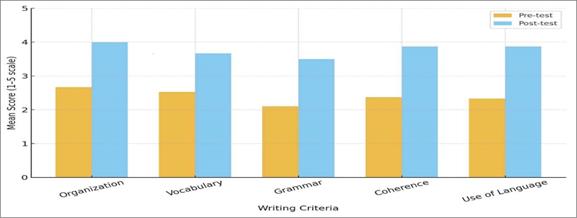
Figure 1. Comparison of Pre-test and Post-test Mean Scores by Criterion
The graphical analysis reveals a uniform upward pattern across all evaluated writing criteria, confirming the positive impacto f ChatGPT on students’ written production. Before the intervention, mean scores ranged from 2.1 to 2.7 points, corresponding to an intermediate level characterized by recurrent grammatical and cohesion errors. After guided model use, scores rose to between 3.5 and 4.0—equivalent to a “good” or “outstanding” performance range.
The sharpest increase occurred in Coherence and Cohesion (+1.5), suggesting that students learned to organize ideas more fluidly and connect paragraphs more clearly. This improvement can be attributed to ChatGPT’s feedback on logical structure, proposing connectors and reformulations that strengthen discourse continuity (Barrot, 2023; Enamorado, 2025). Secondly, Grammar and Syntax improved by approximately +1.4 points, indicating that students successfully reduced grammatical errors through guided revision and correction. The generative model helped detect morph syntactic inconsistencies and propose contextualized alternatives, reinforcing inductive learning from error correction (Mahapatra, 2024).
Meanwhile, Vocabulary and Lexicon displayed the most moderate growth (+1.1), though still following an upward trend. This may be because lexical development requires prolonged exposure and autonomous practice. Nonetheless, the observed increase demonstrates that ChatGPT contributed to expanding the range of words and idiomatic expressions employed in writing tasks.
Hence, the results display a balanced improvement curve, with no declines in any criterion— supporting the ANOVA results (p > 0.05) that confirmed homogeneity in progress. This pattern demonstrates that the model not only corrects isolated errors but also functions as a transversal mediator that simultaneously strengthens organization, grammatical accuracy, and expressive fluency.
Discussion
The findings of this study demonstrate that the use of ChatGPT significantly enhanced the English writing competence of university students, particularly in areas such as coherence, grammar, and textual structure. This outcome coincides with the studies by Barrot (2023) and Yanuarti et al. (2024), who reported substantial improvements in idea organization and linguistic precision following the integration of language models in composition courses. In both cases, automated feedback and sentence reformulation provided by artificial intelligence allowed learners to develop greater control over the writing process. Similarly, Lund and Wang (2025) argue that exposure to ChatGPT-generated text models promotes a clearer understanding of discourse conventions and textual cohesion—trends that closely align with those observed in this study.
Comparisons with recent research, including Murshidi and Algrin et al.(2024), reinforce that students’ perceptions of ChatGPT are predominantly positive, albeit accompanied by some caution toward technological dependence. Consistent with Enamorado (2025) and Peters et al. (2024), this study found that students valued immediate feedback, clear examples, and opportunities for judgment-free writing practice—factors that increase confidence in written production. Nonetheless, existing literature warns that unguided use may limit critical thinking or reduce linguistic self-reflection. Therefore, the most relevant contribution of this study lies not only in the quantitative improvement of scores but in confirming that pedagogical integration of ChatGPT within a guided instructional sequence produces sustainable benefits in writing performance, provided that the instructor maintains the role of mentor and quality filter.
Conclusions
The finding show that students perceive ChatGPT as an effective and engaging tool that facilitates writing in English by offering structural support, immediate feedback, and contextual examples. Their responses reflect appreciation for its accessibility and adaptability in assisting with grammar, organization, and vocabulary use.
The perception of ChatGPT as a learning aid indicates growing acceptance of artificial intelligence in academic environments. Students valued the freedom to practice independently while maintaining guidance from instructors, recognizing that the tool complements rather than replaces traditional teaching.
Some participants expressed caution about relying excessively on AI outputs, emphasizing the need for critical verification of suggestions. This balanced view highlights the importance of integrating ChatGPT within a pedagogically guided framework that fosters reflection and autonomy rather than mechanical dependence.
References
Al-Garaady, J., & Mahyoob, M. (2023). ChatGPT’s capabilities in spotting and analyzing writing errors experienced by EFL learners. Arab World English Journal, Special Issue on CALL(9). https://doi.org/10.24093/awej/call9
Ali, J. K. M., Shamsan, M. A. A., Hezam, T. A., & Mohammed, A. A. (2023). Impact of ChatGPT on learning motivation: Teachers and students’ voices. Journal of English Studies in Arabia Felix, 2(1), 41–49. https://doi.org/10.56540/jesaf.v2i1.51
Al-Garaady, J., & Mahyoob, M. (2023). ChatGPT’s capabilities in spotting and analyzing writing errors experienced by EFL learners. Arab World English Journal, Special Issue on CALL(9). https://doi.org/10.24093/awej/call9
Baek, C., Tate, T., & Warschauer, M. (2024). “ChatGPT seems too good to be true”: College students’ use and perceptions of generative AI. Computers and Education: Artificial Intelligence, 7, 100294. https://doi.org/10.1016/j.caeai.2024.100294
Barrot, J. S. (2023). Using ChatGPT for second language writing: Pitfalls and potentials. Assessing Writing, 57, 100745. https://doi.org/10.1016/j.asw.2023.100745
Bonner, E., Lege, R., & Frazier, E. (2023). Large language model-based artificial intelligence in the language classroom: Practical ideas for teaching. Teaching English with Technology, 23(1), 23–41. https://doi.org/10.56297/BKAM1691/WIEO1749
Chan, C. K. Y., & Hu, W. (2023). Students’ voices on generative AI: Perceptions, benefits, and challenges in higher education. International Journal of Educational Technology in Higher Education, 20, 43. https://doi.org/10.1186/s41239-023-00411-8
Dai, W., Lin, J., Jin, F., Li, T., Tsai, Y., Gašević, D., & Chen, G. (2023). Can large language models provide feedback to students? A case study on ChatGPT. https://doi.org/10.35542/osf.io/hcgzj
Dergaa, I., Abdelrahman, M., Varma, A., & Chamari, K. (2023). ChatGPT: Applications, opportunities, and threats for education. Frontiers in Psychology, 14, 1260843. https://doi.org/10.3389/fpsyg.2023.1260843
Imran, M., & Almusharraf, N. (2023). Analyzing the role of ChatGPT as a writing assistant at higher education level: A systematic review of the literature. Contemporary Educational Technology, 15(4), ep464. https://doi.org/10.30935/cedtech/13605
RELC Journal, 54(2), 537–550. https://doi.org/10.1177/0033688223111628
Mahapatra, S. (2024). Impact of ChatGPT on ESL students’ academic writing skills: A mixed methods intervention study. Smart Learning Environments, 11(9). https://doi.org/10.1186/s40561-024-00295-9
Nelson, A. S., Santamaría, P. V., Javens, J. S., & Ricaurte, M. (2025). Students’ perceptions of generative artificial intelligence (GenAI) use in academic writing in English as a foreign language. Education Sciences, 15(5), 611. https://doi.org/10.3390/educsci15050611
Rudolph, J., Tan, S., & Tan, S. (2023). ChatGPT: Bullshit spewer or the end of traditional assessments in higher education? Journal of Applied Learning and Teaching, 6(1), 342–363. https://doi.org/10.37074/jalt.2023.6.1.9
Yan, D. (2023). Impact of ChatGPT on learners in a L2 writing practicum: An exploratory investigation. Educational Information Technology. https://doi.org/10.1007/s10639-023-11742-4
Yanuarti, E., Algrin, D., & Syarifudin, S. (2025). EFL students’ perceptions toward ChatGPT as a writing instrument. ELTIN Journal: Journal of English Language Teaching in Indonesia,13(1),7588.https://ejournal.stkipsiliwangi.ac.id/index.php/eltin/article/view/